Luxury used to be a matter of leather, wood, and silence. Now it lives in the invisible layer between you and the road. The windshield is no longer just a pane of laminated glass, it is a safety system, a sensor array, and the future home of information you can read at 70 miles per hour without taking your eyes off the lane. Spend time in Spartanburg windshield replacement high-end service bays and you start to see a clear pattern, no pun intended. Windshields are becoming the nervous system of the vehicle’s cockpit, and the choices we make about Auto Glass today will shape the cars we enjoy a decade from now.
From Passive Pane to Active Interface
A traditional windshield’s job is simple: stiffness, clarity, and energy absorption in a crash. Laminated glass with a PVB interlayer earned its place because it held together on impact and filtered UV while staying optically true. That convention still matters. Optical distortion gives drivers headaches and hides potholes. Acoustic damping keeps fatigue at bay on long drives. These are not luxuries so much as foundations.
What has changed is how many technologies now depend on that same surface. Advanced driver assistance systems place forward-facing cameras near the rearview mirror. Rain and light sensors nestle in frit bands. Head-up projectors rely on precise reflection angles. Heating elements spider through the lower edge to clear ice fast. Infrared coatings knock solar heat down by measurable degrees. Your choice of windshield determines how well these systems perform, and by extension, how relaxing and safe the drive feels.
Smart Glass, Explained Without the Jargon
Smart glass sounds futuristic until you watch a driver step into a chilled cabin on a July afternoon. The glass did that. Laminates with spectrally selective coatings reflect infrared heat while letting visible light pass, so the cabin stays 5 to 10 degrees cooler after a sun soak. It feels like walking into a shaded veranda instead of a greenhouse, and the HVAC works less, which you notice on long drives or when idling at a valet stand.
The next layer is electrical control. Suspended particle devices and polymer-dispersed liquid crystal technologies control tint with a small voltage. Roof panels got this treatment first, but windshields are coming along in niche models and prototypes. There are hurdles. Regulations limit how dark a windshield can become, and optical haze must stay near zero. But selective dimming along the upper band makes practical sense. Imagine driving into a low winter sun and tapping a steering wheel button for a precise virtual visor that stops glare without chopping your field of view. That will sell itself the first time you crest a snowy ridge at dusk.
Another quiet revolution is acoustic interlayers. A standard PVB layer cuts impact spall and UV, an enhanced acoustic PVB does that while damping mid and high frequency vibrations by several decibels. The difference at 75 mph is conversation without raised voices. Combine this with laminated front side glass and you get the velvet hush we associate with top-tier sedans.
Safety Now Lives in the Glass
Modern safety depends as much on what the driver does not notice as on what the driver does. The windshield anchors ADAS functions that once required bulky modules.
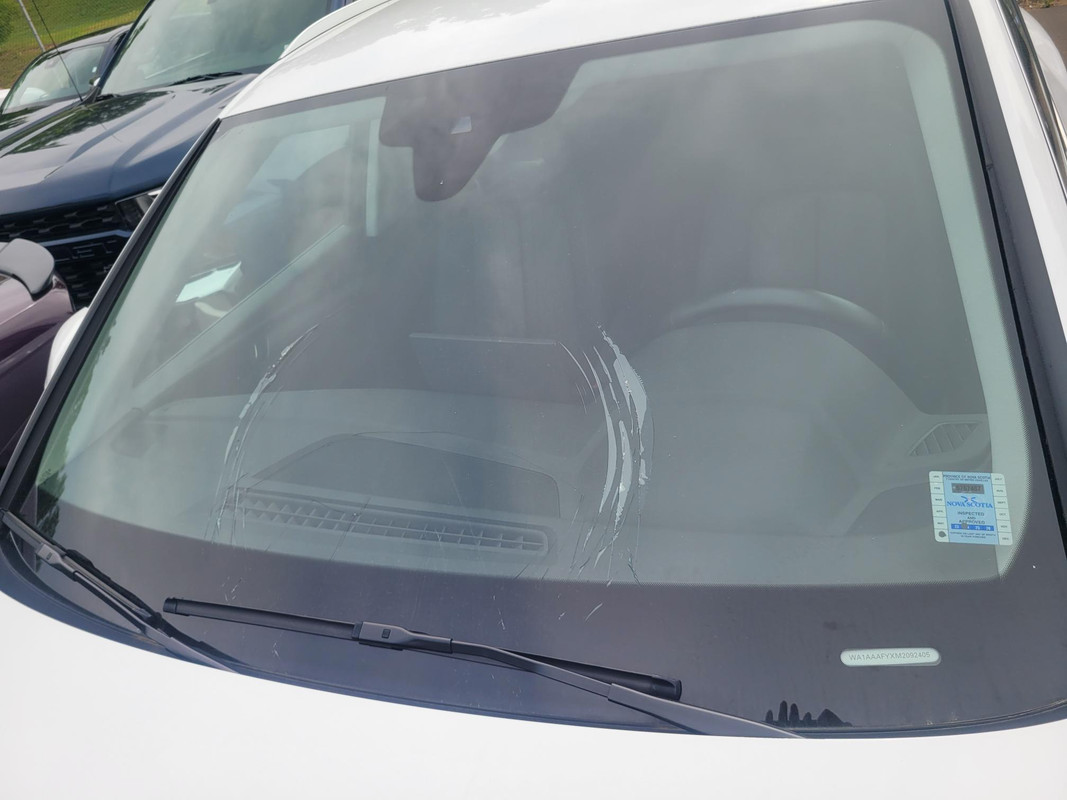
Forward collision cameras. Nestled behind the glass near the mirror, these cameras read lane markings, brake lights, and pedestrians. Their view must be optically perfect through the glass, or false positives and missed cues creep in. We see it in the field. Replace a windshield with an aftermarket unit that does not match the optical wedge or refractive index, and lane keep assist wanders. The car is not wrong, it is looking through a lens it was not designed for.
Rain and light sensors. These live in a clear patch of the frit, bonded with gels that have specific refractive properties. If the bonding pad is distorted or the frit pattern differs, the wipers ignore a drizzle or run on a dry road. It looks trivial until a late-night drive through mist, when you want the car to be smarter than your fatigue.
Heated zones and de-icing conductors. Luxury brands have adopted fine tungsten or silver filaments that clear the wiper rest area in minutes. The best designs bury the filaments so finely you need a flashlight to find them. In cold markets, this is the difference between rolling away calmly and scraping with a loyalty card.
Heads-up display optimization. HUD windshields incorporate a wedge-shaped PVB interlayer tuned to the projector’s angle. This prevents ghosting, that faint double image that fatigues the eye. Replace a HUD windshield with a standard laminated version and the heads-up display looks like a cheap hologram. It is not a minor annoyance, it is a warranty callback waiting to happen.
When Replacement Becomes Reengineering
There was a time when Windshield Replacement meant a mobile truck, urethane, and a free air freshener. Today, Auto Glass Replacement is more like swapping a calibrated medical lens on a surgical robot. The geometry, coatings, and camera bracket must match down to millimeters. Then the car needs to relearn what it sees.
Here is what changes the day your new windshield goes in. The forward camera requires static or dynamic calibration, sometimes both. Static calibration involves a printed target board placed at exact distances on level ground, usually in a shop with controlled lighting. Dynamic calibration uses real road driving at prescribed speeds for a set time, allowing the system to self tune using lane lines and traffic. Some cars complete in 15 minutes, others take an hour or more. If your shop skips this step, the features may appear to work, until they don’t when you need them most.
The mount matters. Camera housings often look universal, but a two-degree difference in the retention clip or a misaligned gel pad changes the optical axis. We see installers transfer camera brackets from the old glass, only to learn they were designed as one-piece bonded parts. That is when adhesive creep or micro tilt causes intermittent faults. The clean fix is to order the glass with the correct integrated bracket and sensor pack.
Urethane cure times are not marketing copy. High modulus urethane adhesives achieve a safe drive-away strength only after a defined period, which depends on temperature, humidity, and bead size. Luxury vehicles weigh more and rely on the windshield for body stiffness. A rushed handoff to a customer because the clock is tight can compromise airbag performance in a frontal collision, since airbags use the windshield as a backstop. It is the sort of decision that never shows up on an invoice, yet defines whether the shop deserves your trust.
The Quiet Luxury of Thermal Comfort
Sunload makes or breaks a long summer drive. Infrared reflective coatings on windshields cut solar heat gain markedly. In vehicles with large glass areas, the difference in cabin cool-down time after a grocery stop is measurable, often 20 to 30 percent faster. Couples notice it when one partner always turns the vents away to avoid drafts. A cooler cabin requires less aggressive airflow, so the car stays serene.
In winter, a heated windshield helps more than frosted mornings. That gentle warmth along the lower edge also keeps washers flowing and blades pliable. The longevity of wiper rubbers improves because they do not cycle between frozen and slammed into motion. Replacing those blades less often is a modest cost saving, the real gain is the uninterrupted clarity that separates a near miss from a scuff on a rim.
The Coming Role of Augmented Reality
We already rely on HUDs to place speed and turn prompts in our sightline. The next step is layering usable navigation onto the world with precision. Augmented reality navigation draws an arrow that seems to sit in the lane you must take, not just a general direction. That demands a windshield engineered as an optical element with uniform indices and coatings that minimize internal reflections. Any haze or birefringence multiplies when light bounces between layers, and the eye reads those artifacts as distrust. People stop believing the overlay and revert to glancing at the center screen, which negates the point.
Automakers are testing variable reflectance zones, essentially selective mirrors embedded in the glass lamination, so information appears sharp from the driver seat while remaining near invisible to a passenger. Shared cabins need that. The driver sees a left turn prompt hovering over a boulevard, the passenger sees skyline. This is not a gimmick, it is a safety choice that respects the human brain’s tunnel vision when stressed.
Trade-offs No Spec Sheet Will Tell You
Everything elegant in a car lives in tension with something else. A windshield with aggressive infrared rejection may interfere with toll transponders or garage remotes, because the metallized layer reflects not only heat but some RF frequencies. Most designs include a small uncoated “toll window” near the mirror, a dotted or clear patch that lets signals through. Owners miss it, then complain their transponder stopped working. The fix is simple, place the device in that window. The better fix at purchase time is to ask the brand specialist to show you the location.
Heated windshields are wonderful until you photograph night scenery through the glass. Those micro wires can catch highlights and create a fine mesh in the image. Most people never notice, photographers do. If that matters, consider whether the car offers zoned heating only at the wiper park instead of full field heating.
Acoustic interlayers add luxury-grade quiet, yet in some environments they can amplify a low frequency boom from certain tire and pavement combinations, a phenomenon tied to cabin resonance. The cure is usually a tire compound change or a slightly different inflation pressure, not a change of glass. Knowing that saves time and avoids blaming the wrong part.
The Supply Chain Reality of Premium Glass
In the field, the difference between original equipment and aftermarket glass ranges from imperceptible to glaring. The best aftermarket manufacturers license tooling and match coatings to OE spec. Others get close, but “close” is not enough for a camera looking for lane edge contrast at 300 feet. If your vehicle uses a HUD, a forward radar behind a silvered logo, rain sensors, or lane cameras, ask your shop for OE or OE-equivalent with documented compatibility. The price delta varies by model, often a few hundred dollars. Against the cost of an advanced driver assist fault, that premium can be cheap insurance.
Lead times matter too. Some specialty windshields with cameras, heating, acoustic layers, and HUD wedges can take days to source. Coordinate with your service advisor and your insurer so calibration can be booked the same day the glass arrives. If a mobile service promises same-day everything on a rare configuration, ask questions. A patient repair that restores the original function is the luxury move.
What Master Technicians Check After Replacement
Here is a short, focused checklist that professionals use when handing back a car after Windshield Replacement. It is not a marketing flourish, it is a practical filter for quality.
- Visual distortion test by scanning vertical lines through the glass at multiple angles. Wiper sweep, washer aim, and heated zone operation including the wiper rest area. Lane keep assist, auto high beam, and forward collision warning self-tests after calibration. Rain sensor response to controlled mist and light sensor response to covered exposure. Cabin noise check over rough asphalt at 45 to 55 mph to confirm acoustic interlayer performance.
Insurance, Calibration, and the Value of Saying No
Insurance carriers are catching up to the cost and complexity of modern Auto Glass. Policies that once treated glass as a minor claim now recognize the calibration line item. If a shop quotes a suspiciously low out-of-pocket amount, look for what is missing. A proper calibration uses targets, level floors, or a defined drive cycle, and it takes a technician’s time. It is tempting to accept a bargain where the car’s dash shows no error lights afterward. Invisible misalignment is still misalignment.
There are times to decline a replacement. If a chip sits outside the critical zone and a repair can halt its growth, a resin fill with proper ultraviolet cure preserves the factory optical properties. The driver keeps the original glass, the ADAS stays undisturbed, and the shop records a save. On the other hand, a crack that reaches the edge or crosses a camera’s field should trigger replacement. Edge cracks compromise structural integrity, and a camera looking through a repaired area will not see as it should.
Sustainability Woven Into Clarity
Glass production and lamination are energy intensive. The greenest windshield is the one that is not replaced prematurely. Solar control coatings lower HVAC load, which has a measurable emissions benefit over years of use. Acoustic interlayers reduce fatigue, and drivers who arrive calmer make fewer mistakes. It is an indirect safety gain that rarely appears in charts.
Recycling laminated glass is improving, though it remains more complex than recycling tempered side glass. Some regions have facilities that delaminate and recover both the glass and PVB. If you care about the footprint of your vehicle, ask your shop where your old windshield goes. The signal to the market is simple, customers notice, and suppliers invest accordingly.
What the Next Five Years Likely Bring
A few trends look inevitable based on prototypes and early production models I have seen up close.
- Wider adoption of zoned electrochromic shading in the upper band with driver-selectable presets tied to seat position. Standardized calibration protocols and cloud-logged calibration certificates stored in the vehicle’s digital record. Integrated sensor heating to maintain camera performance in snow, without relying solely on cabin air. Improved RF pass-through zones in IR-reflective windshields to accommodate toll tags and vehicle-to-infrastructure communication. Greater use of heads-up displays leveraging partial reflective layers that allow sharper augmented elements with lower projector brightness.
None of those require giant leaps. They build on proven materials and better integration between glass makers and sensor suppliers. The differentiator will be execution. A premium car will feel seamless, a lesser one will reveal seams through small irritations.
Living With Smart Glass Day to Day
Owners often ask what they should do differently as windshields become smarter. Most of it is simple care, and it pays off.
Keep the area around the mirror clean. Avoid silicone-heavy cleaners on the camera window and rain sensor gel pad area. A soft cloth and a mild glass cleaner without ammonia is enough. Harsh chemicals move trace residues into places where optics matter.
Use correct washer fluids in winter. Cheap blends can leave films that smear under backlight. On a windy night, that film turns a streetlight into a starburst and erases depth perception. The right fluid costs a few dollars more and spares you that stress.
Replace wiper blades on schedule, not when they streak. Modern blades deform slowly, so owners adapt to a degraded wipe without noticing. A fresh set every 6 to 12 months, depending on climate, protects your investment in the glass itself.
Ask for calibration documentation after service. Treat it like an alignment printout. You would not accept a suspension repair without numbers, do not accept an ADAS-dependent Windshield replacement without proof the system relearned correctly.
When possible, park with thought. A few degrees of shade from a building line may keep the cabin tenable on a hot day. Solar control coatings help, but good habits work with technology, not against it.
The Aesthetics of Confidence
A beautiful drive is not only what you see, but how it feels to see it. The right windshield delivers a clean, quiet, and effortless view, where the car’s guidance joins your intention without drawing attention to itself. Luxury is the absence of friction, the way a well-cut crystal disappears when filled, leaving only the wine. That is where smart glass is taking us.
Spend time behind a windshield that filters heat well, holds HUD text steady, and keeps driver aids calibrated so they intervene subtly, and you stop thinking about technology. You notice the way the road reveals itself early, how your shoulders settle, how the cabin stays a sanctuary while the world moves by. It is easy to fixate on horsepower numbers and screens measured corner to corner. The quiet masterpiece is the glass right in front of you.
Choose carefully when the day comes for Auto Glass Replacement. Ask for the windscreen that preserves your sensors and your serenity. Accept the calibration appointment, even if it means an extra hour. These are the grown-up decisions that keep a luxury car feeling new long after the first wax has washed away.
The future of the windshield is not a gimmick. It is a promise that the view will stay clear, the cabin will stay calm, and the car will stand ready to help without shouting about it. That, more than any spec sheet, defines luxury on the road.